1.3 - Certification Types
Regulatory verification date: August 5, 2026
Primary authority: 40 CFR § 82.161 and current EPA Section 608 certification guidance
Course role: Explains how Core, Type I, Type II, Type III, and Universal certification relate to the equipment a technician may service
Learning Objectives
After completing this section, a student should be able to:
- Identify the four EPA Section 608 certification categories.
- Explain the purpose of the Core examination section.
- Distinguish Type I, Type II, Type III, and Universal certification.
- Match representative refrigeration and air-conditioning equipment to the appropriate certification type.
- Explain why equipment classification, rather than refrigerant name alone, determines the required Section 608 certification.
- Apply the small-appliance definition when selecting Type I certification.
- Explain the scope of Type II certification, including medium-, high-, and very-high-pressure appliances.
- Explain the scope of Type III certification for low-pressure appliances.
- Distinguish Universal certification from a separate fourth equipment type.
- Recognize important boundary cases involving small appliances, MVACs, MVAC-like appliances, and equipment disposal.
Introduction
EPA Section 608 certification is organized by appliance category.
The required certification does not depend only on:
- The refrigerant name.
- The equipment brand.
- The technician’s job title.
- The size of the building.
- Whether the equipment is used for residential or commercial service.
Instead, the technician must determine what kind of appliance will be maintained, serviced, repaired, or disposed of.
EPA recognizes four certification categories:
- Type I — small appliances.
- Type II — medium-, high-, and very-high-pressure appliances, except small appliances, motor-vehicle air conditioners, and MVAC-like appliances.
- Type III — low-pressure appliances.
- Universal — all appliance categories covered by Types I, II, and III.
The certification examination also contains a common Core section. Core is not a separate appliance certification category. It covers knowledge needed across all three equipment types, including environmental effects, regulations, refrigerant handling, recovery concepts, safety, and shipping.
A technician’s certification must match the appliance being serviced. A person holding only Type I certification may not perform Type II or Type III refrigerant work. A Universal technician has passed the required Core, Type I, Type II, and Type III examination sections under the conditions required for Universal certification.
Key Concepts
1. Certification Is Based on Appliance Type
EPA requires the certification category to match the type of appliance on which the technician performs covered work.
The basic classification sequence is:
- Determine whether the appliance meets the definition of a small appliance.
- If it is not a small appliance, determine the appliance pressure classification.
- Determine whether it is:
- Medium pressure.
- High pressure.
- Very high pressure.
- Low pressure.
- Check whether the equipment is an MVAC or MVAC-like appliance.
- Select Type I, Type II, Type III, or Universal certification.
This classification process is more reliable than identifying certification from the equipment’s appearance alone.
2. Core Is the Common Knowledge Foundation
The Core examination section addresses knowledge that applies across the Section 608 program.
EPA’s current test-topic outline includes Core subjects such as:
- Environmental impacts of refrigerants.
- Ozone depletion.
- Refrigerant families.
- Clean Air Act requirements.
- Section 608 regulations.
- Recovering, recycling, and reclaiming.
- Recovery equipment.
- Evacuation.
- Refrigerant cylinders.
- Safety.
- Shipping.
- Refrigerant release prevention.
Core is not a stand-alone authorization to service every appliance.
Passing Core alone does not provide:
- Type I authorization.
- Type II authorization.
- Type III authorization.
- Universal certification.
The student must also pass the equipment-specific examination section required for the desired certification.
3. Type I Certification
Type I certification applies to persons who maintain, service, or repair small appliances.
A small appliance is an appliance that is:
- Fully manufactured at a factory.
- Charged at a factory.
- Hermetically sealed at a factory.
- Charged with 5 pounds or less of refrigerant.
The appliance must satisfy the complete definition. A system is not automatically a small appliance merely because its current refrigerant charge is 5 pounds or less.
Examples named in the federal definition include:
- Household refrigerators.
- Household freezers.
- Room air conditioners.
- Window air conditioners.
- Packaged terminal air conditioners.
- Packaged terminal heat pumps.
- Dehumidifiers.
- Under-the-counter ice makers.
- Vending machines.
- Drinking-water coolers.
Other equipment may qualify when it satisfies the regulatory definition.
Type I Classification Test
Ask all four questions:
| Question | Required Answer |
|---|---|
| Was the appliance fully manufactured at a factory? | Yes |
| Was it charged at a factory? | Yes |
| Was it hermetically sealed at a factory? | Yes |
| Does it contain 5 pounds or less of refrigerant? | Yes |
If any required condition is not satisfied, do not classify the equipment as a small appliance solely because it contains 5 pounds or less of refrigerant.
Type I Boundary Examples
| Equipment | Likely Classification | Reason |
|---|---|---|
| Factory-sealed household refrigerator with less than 5 lb of refrigerant | Type I | Meets the small-appliance definition |
| Factory-sealed window air conditioner | Type I | Listed small-appliance example |
| Packaged terminal heat pump with 5 lb or less | Type I | Listed small-appliance example when factory manufactured, charged, and sealed |
| Field-assembled split system containing 4 lb | Type II, not Type I | Charge alone does not make it a small appliance |
| Residential heat pump containing 4.5 lb | Type II, not Type I | Normally field-connected rather than hermetically sealed at the factory |
| Factory-sealed appliance containing more than 5 lb | Not Type I | Exceeds the small-appliance charge limit |
Detailed Type I recovery requirements are developed in Module 7.
4. Type II Certification
Type II certification applies to persons who maintain, service, repair, or dispose of:
- Medium-pressure appliances.
- High-pressure appliances.
- Very-high-pressure appliances.
The Type II category excludes:
- Small appliances covered by Type I.
- MVACs.
- MVAC-like appliances when another applicable certification pathway is used.
EPA’s public-facing material commonly labels Type II as high-pressure, but the current regulation at 40 CFR § 82.161 includes medium-, high-, and very-high-pressure appliances.
Representative Type II equipment includes:
- Residential split-system air conditioners.
- Residential heat pumps.
- Commercial split systems.
- Packaged rooftop units.
- Commercial refrigeration systems.
- Supermarket refrigeration racks.
- Walk-in coolers and freezers.
- Reach-in commercial refrigeration equipment that does not meet the small-appliance definition.
- Refrigerated process equipment.
- Industrial-process refrigeration systems.
- Certain very-high-pressure systems.
A technician must not classify equipment as Type II only because it is physically large. Type II classification is tied to the regulatory equipment and pressure categories.
Common Type II Examples
| Equipment | Typical Certification | Important Qualification |
|---|---|---|
| Residential central air-conditioning split system | Type II | Not a small appliance |
| Residential split-system heat pump | Type II | Not a small appliance |
| Rooftop package unit | Type II | Common high-pressure appliance |
| Supermarket refrigeration rack | Type II | Commercial refrigeration |
| Walk-in freezer | Type II | Field-installed system; not a small appliance |
| Factory-sealed commercial appliance with 5 lb or less | Evaluate definition | It may be Type I only if every small-appliance condition is met |
| Low-pressure centrifugal chiller | Type III | Pressure category controls, not equipment size |
| Household refrigerator | Type I | Small-appliance definition controls |
Detailed Type II procedures are developed in Module 8.
5. Type III Certification
Type III certification applies to persons who maintain, service, repair, or dispose of low-pressure appliances.
The most common examples are:
- Low-pressure centrifugal chillers.
- Low-pressure absorption chillers.
- Other appliances classified as low pressure under the applicable Section 608 definitions and test framework.
Low-pressure appliances require specialized knowledge because they often operate below atmospheric pressure during normal operation.
As a result:
- Air and moisture can leak into the appliance.
- Purge systems may be required.
- Leak detection differs from high-pressure systems.
- Recovery must prevent water from freezing in heat-exchanger tubes.
- Charging procedures may require introducing vapor before liquid.
- Evacuation requirements are expressed differently from high-pressure-system requirements.
Type III is not determined by:
- The physical size of the appliance alone.
- Whether the appliance is installed in a mechanical room.
- Whether the refrigerant is called a “chiller refrigerant.”
- Whether the appliance serves a commercial building.
The pressure classification controls.
Detailed Type III procedures are developed in Module 9.
6. Universal Certification
Universal certification authorizes a technician to perform covered work on all appliance categories included under:
- Type I.
- Type II.
- Type III.
Universal is not a separate fourth kind of appliance. It is the combined certification for all three appliance categories.
To receive Universal certification, EPA states that an individual must pass the examinations at all levels for stationary refrigeration and cooling equipment under:
- Closed-book conditions.
- Secure conditions.
- Proctored conditions.
- An EPA-approved Section 608 testing and certification organization.
A Core examination taken under open-book conditions cannot be used to obtain Universal certification.
The detailed examination structure is covered in Section 1.5.
7. Certification Scope Comparison
| Certification | Equipment Scope | Representative Equipment | Does It Include Other Types? |
|---|---|---|---|
| Core only | Common knowledge section; not an equipment authorization by itself | Environmental, regulatory, recovery, and safety knowledge | No |
| Type I | Small appliances | Household refrigerator, window unit, dehumidifier, packaged terminal unit meeting the definition | No |
| Type II | Medium-, high-, and very-high-pressure appliances, except small appliances and MVACs | Split systems, heat pumps, rooftop units, walk-ins, supermarket systems | No |
| Type III | Low-pressure appliances | Low-pressure centrifugal and absorption chillers | No |
| Universal | Types I, II, and III | All stationary appliance categories covered by the three types | Yes |
8. Certification Does Not Depend on One Refrigerant
EPA does not issue a separate Section 608 certification for each refrigerant.
Examples of labels that do not replace Section 608 certification include:
- R-410A certification.
- R-32 training card.
- R-454B training certificate.
- A2L awareness certificate.
- Manufacturer product training.
- Refrigerant supplier training.
These forms of training may be technically important or required by:
- Employers.
- Manufacturers.
- Codes.
- Insurance programs.
- Safety policies.
- State or local authorities.
They are not substitutes for the applicable EPA Section 608 certification.
The correct EPA certification remains based on appliance type.
9. One Appliance Can Require More Than Visual Identification
Students should avoid classifying equipment from a photograph alone.
For example:
- A compact packaged unit may be Type I if it meets the full small-appliance definition.
- A similarly sized field-connected unit may be Type II.
- A large chiller may be Type II or Type III depending on pressure classification.
- Commercial use does not automatically mean Type II.
- Residential use does not automatically mean Type I.
Useful classification information includes:
- Nameplate.
- Refrigerant designation.
- Factory charge.
- Total charge.
- Factory-sealed status.
- Installation configuration.
- Pressure category.
- Equipment type.
- Manufacturer documentation.
10. Service and Disposal Do Not Always Use Identical Wording
The current regulation distinguishes among:
- Maintaining.
- Servicing.
- Repairing.
- Disposing.
For Type II and Type III, the regulation expressly includes disposal.
For Type I, the regulation states that persons who maintain, service, or repair small appliances must be Type I technicians. It separately states that persons disposing of small appliances, MVACs, and MVAC-like appliances are not required to be certified.
This disposal exception does not remove:
- Refrigerant recovery requirements.
- Safe-disposal duties.
- Verification responsibilities.
- Recordkeeping requirements where applicable.
The exception is discussed in Section 1.2 and Module 6.
11. MVAC and MVAC-Like Equipment Are Boundary Cases
A motor-vehicle air conditioner (MVAC) is primarily governed by Section 609 for service performed for consideration.
An MVAC-like appliance resembles an MVAC system but is used in equipment such as certain off-road vehicles or other applications defined by EPA.
Under the current regulation:
- A person maintaining, servicing, or repairing an MVAC-like appliance may use Type II certification or the applicable Section 609 certification pathway.
- A person servicing an MVAC for consideration must be certified under Section 609.
- Persons disposing of MVACs and MVAC-like appliances are excluded from the Section 608 technician-certification requirement for the disposal activity.
The detailed relationship between Sections 608 and 609 is explained in Section 1.4.
12. Certification Category Does Not Replace Safe Work Practices
A technician holding the correct certification type must still:
- Follow current regulations.
- Use certified recovery equipment.
- Select a suitable recovery cylinder.
- Avoid refrigerant mixing.
- Follow manufacturer instructions.
- Use appropriate personal protective equipment.
- Follow refrigerant-specific safety requirements.
- Comply with state and local licensing rules.
Certification identifies the appliance categories for which the technician has passed the EPA examination. It does not prove mastery of every product, refrigerant, or service procedure.
Technical and Regulatory Details
1. Regulatory Certification Categories
The current regulatory categories in 40 CFR § 82.161 are summarized below.
| Regulatory Provision | Required Certification |
|---|---|
| Maintain, service, or repair small appliances | Type I |
| Maintain, service, repair, or dispose of medium-, high-, or very-high-pressure appliances, except small appliances, MVACs, and MVAC-like appliances | Type II |
| Maintain, service, repair, or dispose of low-pressure appliances | Type III |
| Perform covered work on all appliances described under Types I, II, and III | Universal |
| Maintain, service, or repair MVAC-like appliances | Type II or applicable Section 609 certification |
| Maintain, service, or repair MVACs for consideration | Section 609 |
| Dispose of small appliances, MVACs, or MVAC-like appliances | Section 608 technician certification not required for the disposal activity |
2. Public EPA Label Versus Regulatory Wording
EPA’s public certification page describes Type II as servicing or disposing of high- or very-high-pressure appliances.
The current regulation includes:
- Medium pressure.
- High pressure.
- Very high pressure.
For this course:
- The public label Type II — High-Pressure may be used for concise headings.
- The detailed technical description must include medium-, high-, and very-high-pressure appliances.
- Current regulatory wording controls when precision is required.
3. Small-Appliance Charge Limit
The small-appliance definition uses a maximum charge of:
5 pounds of refrigerant
The charge limit is necessary but not sufficient.
The appliance must also be:
- Fully manufactured in a factory.
- Charged in a factory.
- Hermetically sealed in a factory.
A field-connected split system containing 5 pounds or less does not become Type I merely because of its charge.
4. Universal Certification Conditions
EPA’s current guidance states that Universal certification requires passing all levels under closed-book, secure, proctored conditions through an EPA-approved testing and certification organization.
Therefore:
- An open-book Core result cannot be used toward Universal certification.
- A person may hold a limited certification without being Universal.
- Passing one equipment-specific section does not authorize the other types.
- Universal requires successful completion of the complete required examination set.
5. Certification Credentials and Proof
EPA-approved programs issue certification credentials.
EPA itself:
- Approves testing and certification organizations.
- Does not directly issue individual certification cards.
- Does not maintain a complete public database of every certified technician.
- Does not normally replace a lost certification card.
A technician should retain proof of certification and know which approved organization issued it.
Credential and examination administration are covered in Section 1.5.
Equipment Classification Procedure
Use the following process before selecting the certification type.
Step 1 — Check for MVAC or MVAC-Like Equipment
If the equipment is an MVAC, Section 609 generally controls service for consideration.
If it is MVAC-like, evaluate the Type II and Section 609 pathways.
Step 2 — Check the Small-Appliance Definition
Confirm all of the following:
- Factory manufactured.
- Factory charged.
- Factory hermetically sealed.
- 5 pounds or less of refrigerant.
If all are true, the appliance is generally Type I.
Step 3 — Determine the Pressure Category
If the equipment is not Type I, determine whether it is:
- Low pressure.
- Medium pressure.
- High pressure.
- Very high pressure.
Step 4 — Select the Certification
- Low pressure → Type III.
- Medium, high, or very high pressure → Type II.
- All categories → Universal.
Step 5 — Confirm the Work Activity
Check whether the work involves:
- Maintenance.
- Service.
- Repair.
- Installation.
- Disposal.
Also check the disposal exceptions discussed in Section 1.2.
Classification Scenarios
| Scenario | Correct Certification | Reasoning |
|---|---|---|
| Service a factory-sealed household refrigerator | Type I | It is a listed small appliance |
| Replace a compressor in a window air conditioner | Type I | Window units are small appliances when the definition is met |
| Service a residential central split-system air conditioner | Type II | It is not a factory-sealed small appliance |
| Connect refrigerant lines on a residential mini-split | Type II | The field-connected high-pressure appliance is not Type I |
| Service a supermarket refrigeration rack | Type II | Commercial high-pressure refrigeration |
| Service a walk-in freezer | Type II | Field-installed refrigeration system, not a small appliance |
| Service a low-pressure centrifugal chiller | Type III | Low-pressure classification controls |
| Service a low-pressure absorption chiller | Type III | Low-pressure appliance |
| Service small appliances, split systems, and low-pressure chillers | Universal | Work spans Types I, II, and III |
| Service an MVAC for consideration | Section 609 | Motor-vehicle air conditioning is primarily governed by Section 609 |
| Service an MVAC-like appliance | Type II or applicable Section 609 pathway | Current regulation permits either specified route |
| Dispose of a household refrigerator | No Section 608 technician certification required for the disposal activity | Recovery and safe-disposal requirements still apply |
Important Terms
Core
Core is the common examination section covering environmental effects, refrigerant regulations, recovery concepts, safety, cylinders, and other knowledge used across Types I, II, and III. Core alone is not an equipment certification.
Medium-Pressure Appliance
A medium-pressure appliance is an appliance falling within the medium-pressure category defined by the Section 608 regulatory and testing framework. It is included under Type II certification.
High-Pressure Appliance
A high-pressure appliance is an appliance classified within the high-pressure category. Common Type II examples include many residential air conditioners, heat pumps, and commercial refrigeration systems.
Very-High-Pressure Appliance
A very-high-pressure appliance is an appliance using a refrigerant classified in the very-high-pressure category. Type II certification applies.
Low-Pressure Appliance
A low-pressure appliance is an appliance classified within the low-pressure category. Many centrifugal and absorption chillers fall within Type III.
Small Appliance
A small appliance is fully manufactured, charged, and hermetically sealed in a factory and contains 5 pounds or less of refrigerant.
Type I
Type I is the certification category for maintaining, servicing, or repairing small appliances.
Type II
Type II is the certification category for maintaining, servicing, repairing, or disposing of medium-, high-, or very-high-pressure appliances, except small appliances, MVACs, and MVAC-like appliances.
Type III
Type III is the certification category for maintaining, servicing, repairing, or disposing of low-pressure appliances.
Universal
Universal certification covers all appliance categories included under Types I, II, and III.
Figures and Diagrams
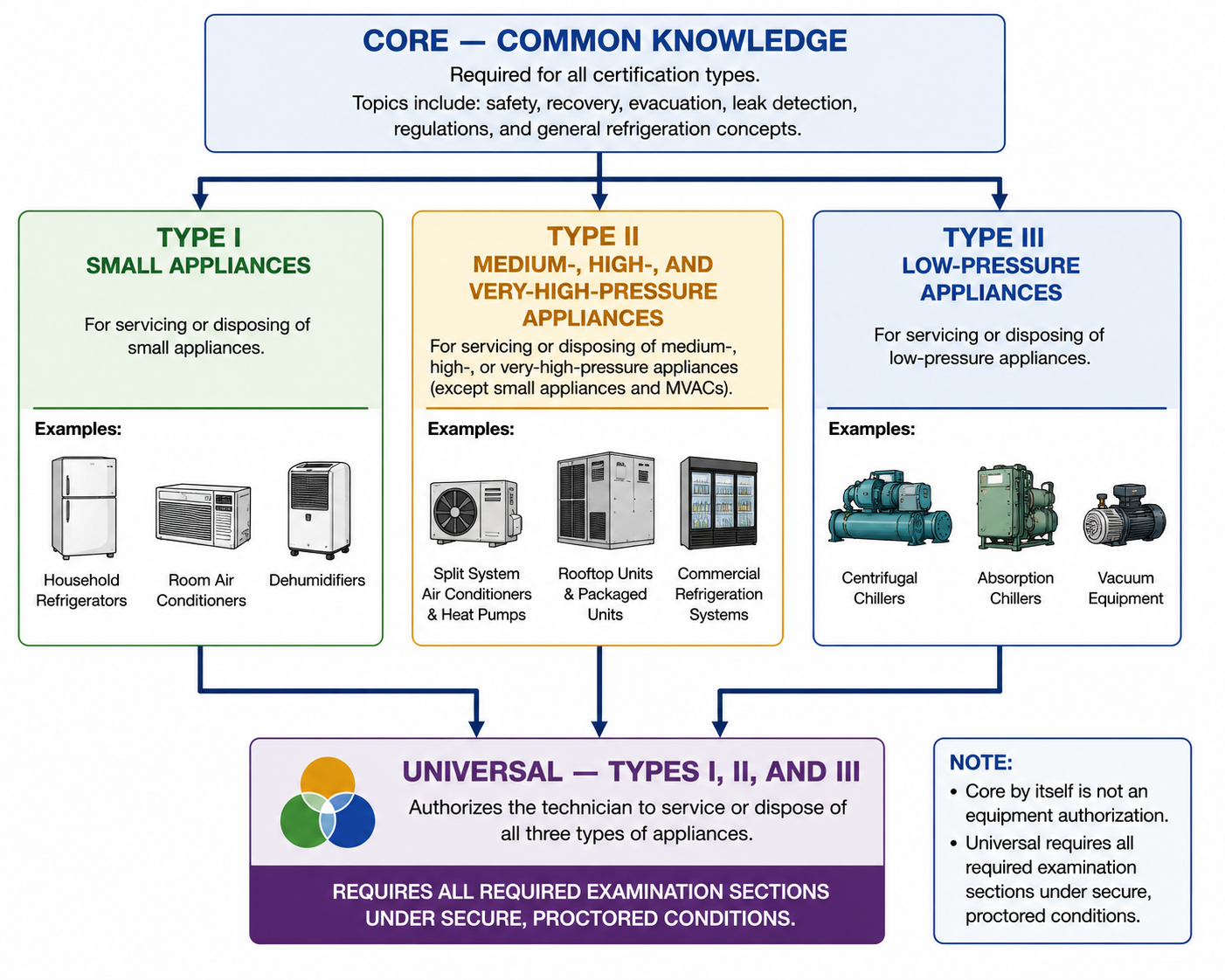
Figure 1.3.1 – Relationship among Core, Type I, Type II, Type III, and Universal certification.
AI-generated instructional figure: It may contain visual inaccuracies. Use the accompanying lesson text and cited authoritative sources to verify technical and regulatory details.
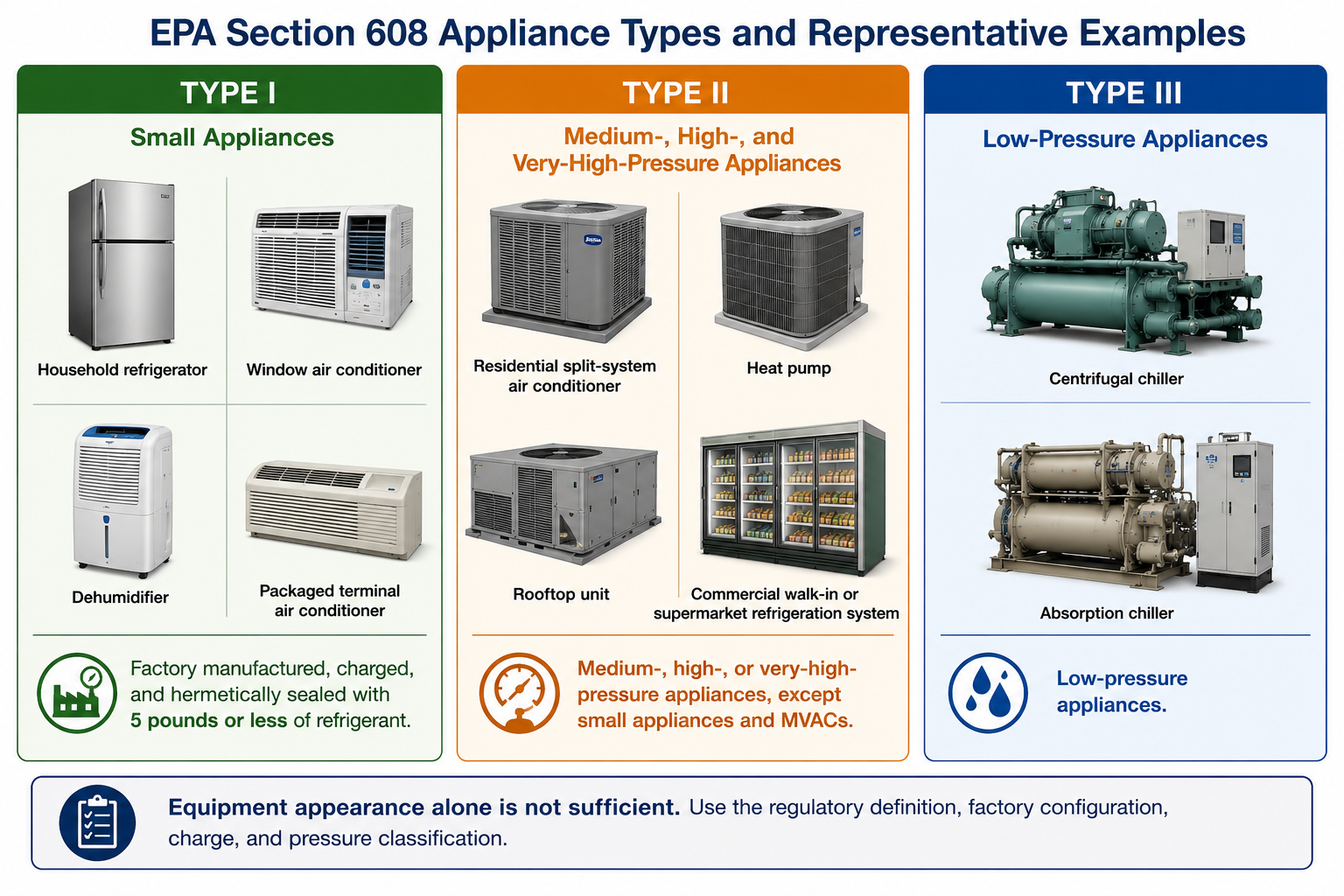
Figure 1.3.2 – Representative equipment associated with Type I, Type II, and Type III certification.
AI-generated instructional figure: It may contain visual inaccuracies. Use the accompanying lesson text and cited authoritative sources to verify technical and regulatory details.
EPA 608 Exam Focus
What Students Must Remember
- EPA recognizes Type I, Type II, Type III, and Universal certification.
- Core is the common examination section; it is not a separate equipment authorization.
- Type I applies to small appliances.
- A small appliance must be factory manufactured, factory charged, factory hermetically sealed, and contain 5 pounds or less of refrigerant.
- Charge alone does not determine Type I.
- Type II includes medium-, high-, and very-high-pressure appliances.
- Type II excludes small appliances and MVACs.
- Type III applies to low-pressure appliances.
- Universal covers Types I, II, and III.
- Universal is not a fourth pressure category.
- Universal requires all required examination levels under secure, closed-book, proctored conditions.
- An open-book Core result cannot be used for Universal certification.
- EPA certification is based on appliance type, not on a separate credential for each refrigerant.
- An R-410A or A2L training card does not replace Section 608 certification.
- MVAC service is primarily governed by Section 609.
- MVAC-like equipment can involve either Type II or the applicable Section 609 route.
- Disposal of small appliances, MVACs, and MVAC-like appliances is excluded from the Section 608 technician-certification requirement for disposal, but recovery duties remain.
Typical Exam Question Patterns
Students may be asked to:
- Identify the correct certification for a listed appliance.
- Distinguish Core from an equipment-specific certification.
- Identify all elements of the small-appliance definition.
- Determine whether a 5-pound field-connected system is Type I.
- Identify representative Type II equipment.
- Identify low-pressure chiller service as Type III.
- Determine what is required for Universal certification.
- Recognize that Universal is a combination of Types I, II, and III.
- Distinguish Section 608 from Section 609.
- Recognize that refrigerant-specific training does not replace EPA certification.
- Identify the disposal exception for small appliances.
High-Priority Comparison Table
| Exam Clue | Most Likely Answer |
|---|---|
| Factory manufactured, factory charged, hermetically sealed, 5 lb or less | Type I |
| Residential central split system | Type II |
| Heat pump with field-connected refrigerant lines | Type II |
| Rooftop unit | Type II |
| Walk-in cooler or supermarket rack | Type II |
| Low-pressure centrifugal chiller | Type III |
| Low-pressure absorption chiller | Type III |
| All stationary appliance categories | Universal |
| Common environmental and regulatory knowledge | Core |
| Motor-vehicle air conditioner serviced for consideration | Section 609 |
Common Mistakes and Confusing Points
Mistake 1: Treating Core as a Complete Certification
Core is common knowledge. An equipment-specific section must also be passed for Type I, Type II, or Type III certification.
Mistake 2: Assuming 5 Pounds or Less Always Means Type I
The appliance must also be fully manufactured, charged, and hermetically sealed at a factory.
Mistake 3: Treating Every Residential Appliance as Type I
Residential split-system air conditioners and heat pumps are normally Type II because they are field connected and do not meet the small-appliance definition.
Mistake 4: Treating Every Large Appliance as Type III
A large supermarket refrigeration system may be Type II. Type III is based on low-pressure classification, not physical size.
Mistake 5: Omitting Medium-Pressure Appliances From Type II
EPA’s public shorthand often says “high-pressure,” but the current regulation includes medium-, high-, and very-high-pressure appliances.
Mistake 6: Treating Universal as a Separate Equipment Type
Universal combines Types I, II, and III. There is no separate Universal appliance category.
Mistake 7: Assuming an Open-Book Core Result Can Be Used for Universal
EPA states that an open-book Core exam cannot be used to obtain Universal certification.
Mistake 8: Assuming R-410A Training Replaces Section 608
EPA does not issue a separate R-410A certification. Refrigerant-specific training is not equivalent to Section 608 certification.
Mistake 9: Classifying Equipment From Appearance Alone
Use factory construction, charge, appliance definition, and pressure classification.
Mistake 10: Assuming the Disposal Exception Eliminates Recovery
The certification exception for disposal of small appliances, MVACs, and MVAC-like appliances does not authorize venting.
Concept-Check Questions
Question 1
Which statement best describes the Core examination section?
A. It authorizes service on all appliance types
B. It is the common knowledge section used with the equipment-specific examinations
C. It is another name for Type I certification
D. It applies only to low-pressure chillers
Question 2
Which combination is required for an appliance to qualify as a small appliance?
A. Residential use and a charge below 10 pounds
B. Factory manufacture, factory charge, factory hermetic sealing, and 5 pounds or less of refrigerant
C. A portable cabinet and a 120-volt electrical connection
D. Any appliance containing 5 pounds or less of refrigerant
Question 3
A field-connected residential split-system air conditioner contains 4 pounds of refrigerant. Which certification is generally required?
A. Type I
B. Type II
C. Type III
D. Section 609
Question 4
Which appliance is most commonly associated with Type III certification?
A. Household refrigerator
B. Residential split-system heat pump
C. Low-pressure centrifugal chiller
D. Window air conditioner
Question 5
Which statement best describes Universal certification?
A. It is a separate certification only for very-high-pressure refrigerants
B. It combines the appliance categories covered by Types I, II, and III
C. It replaces all state and local HVAC licenses
D. It applies only to commercial refrigeration
Question 6
Which appliance is normally covered by Type II certification?
A. Factory-sealed household refrigerator
B. Low-pressure absorption chiller
C. Commercial walk-in freezer
D. Motor-vehicle air conditioner serviced for consideration
Question 7
Which statement about Type II is most accurate?
A. It applies only to physically large equipment
B. It applies to medium-, high-, and very-high-pressure appliances, except specified exclusions
C. It applies only to appliances containing more than 50 pounds of refrigerant
D. It includes all low-pressure chillers
Question 8
A technician has completed an open-book Core examination and passed Type I, Type II, and Type III sections. Which statement is correct regarding Universal certification?
A. Universal is automatic because every topic was studied
B. The open-book Core result cannot be used to obtain Universal certification
C. Core is not needed for Universal certification
D. Only Type II must be retaken
Question 9
Which statement about refrigerant-specific training is correct?
A. An R-410A certificate automatically provides Universal certification
B. An A2L training card replaces Type II certification
C. Refrigerant-specific training may be useful but does not replace the applicable Section 608 certification
D. EPA issues a separate certification for every refrigerant
Question 10
A person performs final disposal of a household refrigerator. Which statement is most accurate?
A. Type I certification is always required for final disposal
B. Universal certification is required because the appliance is being discarded
C. The disposal activity is excluded from the Section 608 technician-certification requirement, but refrigerant recovery and safe-disposal requirements remain
D. Refrigerant may be vented because the appliance is no longer operating
Answers and detailed explanations will be provided in
1.9 - Answers and Explanations.md.
Section Summary
EPA Section 608 certification is organized around appliance type.
- Core provides the common environmental, regulatory, recovery, and safety knowledge.
- Type I applies to small appliances.
- Type II applies to medium-, high-, and very-high-pressure appliances, except specified exclusions.
- Type III applies to low-pressure appliances.
- Universal covers Types I, II, and III.
A small appliance must be:
- Fully manufactured at a factory.
- Charged at a factory.
- Hermetically sealed at a factory.
- Charged with 5 pounds or less of refrigerant.
A field-connected appliance is not automatically Type I merely because it contains 5 pounds or less.
Certification is based on appliance classification, not on a separate EPA credential for each refrigerant. Refrigerant-specific training may supplement, but does not replace, Section 608 certification.
The next section explains the boundary and overlap between Section 608 stationary-appliance certification and Section 609 motor-vehicle air-conditioning certification.
References
Current Regulatory Sources
-
U.S. Environmental Protection Agency, Section 608 Technician Certification Requirements, accessed August 5, 2026.
-
U.S. Environmental Protection Agency, Section 608 Technician Certification, accessed August 5, 2026.
-
U.S. Environmental Protection Agency, Section 608 Test Topics, accessed August 5, 2026.
-
U.S. Environmental Protection Agency, EPA’s Refrigerant Management Program: Questions and Answers for Section 608 Certified Technicians, accessed August 5, 2026.
-
U.S. Environmental Protection Agency, Definitions of Section 608 Terms, accessed August 5, 2026.
-
U.S. Environmental Protection Agency, Section 608 and Section 609 Overlap, accessed August 5, 2026.
-
Electronic Code of Federal Regulations, 40 CFR § 82.152 — Definitions, accessed August 5, 2026.
-
Electronic Code of Federal Regulations, 40 CFR § 82.161 — Technician Certification, accessed August 5, 2026.